
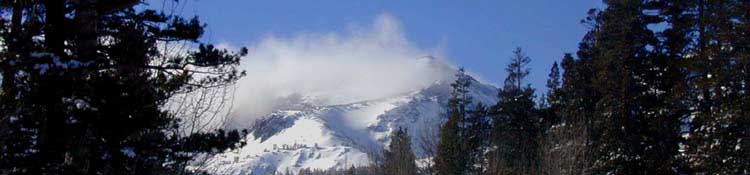
Leavitt Massif's Eastern Flank viewed from near Leavitt Lake. I walked down the SE Flank of this Massif the afternoon before.
High Sierra
Backpacking
Trail Guide
Forums
Sierra
Weather
WeatherNotes Northern
Sierra Weather
Gear
The Art of Walking
Introduction
Languages
Trail Skills
Mountain
Safety
Food
Planning
Trail Arts
More
Information
Social
| HOME PAGE | ART OF WALKING PREFACE |
THE ART OF WALKING CH I |
THIS PAGE IS UNDER CONSTRUCTION: STAY TUNED FOR MUCH MORE!
NOT EDITED
COME ON BACK NOW, 'YA HEAR?
Preface The Art of Walking is concerned with successful self-sufficient long distance travel through a variety of natural terrains over long spans of time. Long Distance Backpacking. Walking is the physical act where our body brings all of our previous training, planning and preparation into direct contact with the terrain. Observing and controlling this contact determines your current physical, mental, and location statuses, while projecting the evolution of our status into the future. The "best-case" goal of The Art of Walking is to inspire the rhythm and balance of body movements necessary to avoid injury, demonstrate techniques of monitoring and regulating the elements of our metabolism for maximum efficiency and to avoid exhaustion, while utilizing constant analysis and testing of the accuracy of our planning within the environment as the journey unfolds. The Art of Walking is the real heart of this website, where all of the other pieces of the site come together into successful execution. The Art of Walking is where your hiking plans, our interpretation of the maps and mileages merge with our gear and clothing selections with all balanced upon your our level of physical fitness. This the the crucible where all of these elements of our reality and our external reality are brought together and forged into our specific backpacking experience. It behooves us to well balance these factors.
That's our potential/ The Art of Walking is a guide to balancing the elements of life on the long trail. The Art of Walking is directed towards achieving and sustaining rich long distance backpacking experiences by understanding and balancing our capacities within the requirements of the trail, its terrain, and the weather. The "worse-case" goal of The Art of Walking is to impart the fundamental self-analysis skills necessary to recognize when things are not going according to plan to be able to adjust our plans to avoid total meltdown on the trail, to remain sufficiently within our skills and capacities to keep ourself hiking, to get out of the mountains in one piece. The Arts of Walking are not an end in themselves, or a specific set of rules, but the relationship between the internal physical and psychological aspects of our evolving journey of external observation, analysis, and engagement. Though the goal is to exercise and these factors, practice this "art," for weeks at a time along the most beautiful trails in the world, balancing these factors is equally important to maximize our short walks in the city as it is for our multi-week backpacking trips down the length of the Sierra Crest. Understanding and balancing the relationship between our limited physical and psychological capacities as we hike through and directly engage with the infinite power and grandure of Nature is our goal, independent of our physical and psycological status. Reaching this state of engaged understanding is not just vital to reach our objective, but the process itself reveals the meaning of life. Status: In American society walking is a lost art. The vast majority of us Americans take walking for granted, grumble about it when we have to walk, and walk rather poorly when we do walk. Most Americans would far prefer to drive. This is emblematic of a general physical disengagement that has spread across the United States. Some observers attribute this disengagement to technology, pointing out that cell phone, portable internet and entertainment devices, let alone personal music players have completely disengaged most urban "walkers" from their environment. These people are constantly running into each other on the streets and sidewalks of our country. Other social critics suggest that the urban environment in America has become at least unfriendly, if not downright unsafe, creating a climate of fear that discourages walking, if not completely squelching social engagement between pedestrians. Whatever the source, few Americans understand the capacity for walking within them, or could guess the size of the self-sufficient load they can carry over great spans of time and space. Instead of struggling to carrying a fat belly across the street, I want to reintroduce our citizens to the joys of walking, the enhanced observational and analytical skills travel through nature draws out, and the deep satisfaction of engaging wild environments. In terms of this website, walking is the key to accessing incredibly beautiful through difficult terrain over long periods of time and space. This benefits will carry over into every part of your life. Skills The general degradation of walking skills in the US has also led to a significant decline not only in our overall physical fitness, but also has degraded the related skills of observation and engagement. People walk around like zombies, seemingly unaware of each other or their surroundings. What a terrible way to live. When I refer to walking as an Art, most city people scoff at me, or just respond with a blank Zombie stare. I believe that the last couple of generations of urban Americans have lost access to a complete realm of experience: actuall physical engagement with their environment, let alone any contact with the natural environment. Adding the lack of Physical Education in the schools to the dangers and fears of living in massive urban centers to the amount of time spent on TV and computer it is amazing that we can even tie our own shoelaces. We have become functionally illiterate in the Art of Walking. As a culture we are no longer sharing or passing practical observational skills, practical analytical skills or the practical knowledge inherent in walking along to our kids. This has had a detrimental effect on kid's identities and their ability to engage their environment, and put themselves into context within that environment. An important aspect of observational skills is the self-analytical ability required to balance physical fitness within the demands of the physical engagement. Call it a fundamental sense of self within the environment's context. Our sense of self and our context within our environment is presently in very sad shape. Observation, analysis, and engagement are inherent parts of the Art of Walking. Without these basic skills in operation we have lost an even greater gift, our ability to reflect the gradure and miracle of life in nature. The loss of observational and analytical skills has dulled our people, and this general lack of fundamental engagement between our citizens, their environment, and each other has seriously damaged our culture. My antidote to American Zombie-ism is re-engagement with nature. I prescribe a healthy and continuous dose of walking to begin developing and exercising your observation and analytic skills. Restoring your engagement with your heels can prevent, or even cure a serious case of Fat Zombie-ism. Zombie-ectomy If you and your faimly and your pals are tired as hell of seeing the same-old tired movie plots, and playing the same old video games, it may be time to introduce creating your own adventures in nature part of your lives. I'm not talking about doing crazy things or engaging in overly dangerous activities. Well, not crazy dangerous activities. Backpacking is dangerous, and does cause regular injury and death. Thus I am doing my damndest to make you aware of the seriousness of the weather, the terrain, the hard work, and gear requirements. Your safety is in your own hands, and depends on your careful attention and approach to each of these backpacking pre-requisites. Let's Play! I've got a role-playing game for the digital zombie generation to stuff into their game consoles: I'm "Wizard," Wizard the Walker. When I'm on my "game," I move swiftly and smoothly across all terrains, up or down, scrambling high loops and mountain peaks along the High Sierra trails as easily as crossing the street, while consuming copious miles (and food!) on the trail. Unless something went wrong. Then I may be starving for a day or six. Or I may demand a scared novice butter-fly a five-stitcher on my head deep in the backcountry, then offer repayment by leading 'em across the next 7 hard miles of trackless cross-country terrain back to the trail. Sometimes I'm dead-beat tired, other times I can't be stopped. I run down the trail in full pack after a few days on the trail. I kick back hard with the kids for days in the middle of "nowhere," and I too repair injured hikers, as I expect them to repair me. The High Sierra trails are real adventure who's moments of thrill are backed up by the real work and the real sweat that bring real rewards. Finding these hidden identities and perspectives within yourself requires a full time committment to physically engaging your environment all year round. Walks, hikes, and off-season trips will keep you engaged and in shape during the Winter, ready to hit the long trails when Summer finally comes. Until you build your experience, gear, and skills to backpack year round. This guide is designed to first bring you from your couch to the mountaintop during Summer, but we don't stop there. As soon as you become an accomplished long distance Summer backpacker we will start building the Spring and Fall gear towards the goal of finally being good-to-go during mid-Winter. Man, tell me about any video game, movie, or television show that is more exciting and deeply satisfying than real-life adventure in the mountains, while making you stronger, and deeply feeding your character. No pretending here. Come on out and live. For you "kids" (18+) who are curious about mountain life, I strongly suggest checking out Trail Crew oppertunities. The CCC is the place kids start Trail Crew careers in California: "Hard work, Low pay, miserable conditions, and more!" The mountains will pull that fat zombie right out of you. It's a zombie-ectomy! The Art of Walking: Basis It's all about Observing, Engaging, and Reflecting the beauty and character of the environment and your own internal status through accessing your inherent physical and intellectual tools. Once you get over yourself. The key to all of this? Besides desire and motivation? Capacity. Capacity gives you the power to kick ass or kick back. You da man. But capacity is not easily gained. It has a high cost. That cost is "Pain." Capacity is the power that results after you have taken the time to turn pain into strength. Physical capacity is an inherent component of the Art of Walking. Your first walks, then your first jogs, will stress your heart, lungs, and legs, and produce a degree of "pain." Carefully following a well-thought out exercise program will gradually transform that pain into capacity. You really don't have to hurt much to get in shape, if you take the time required to do it gradually. I approach building a gradual physical fitness program from the start point of dehabilitating injury or extended lethargy in the Physical Preparation section of the trail guide. The time, effort, and pain spent getting into shape will eventually give you the capacity to carry you and your pack down the length, across width, or into the depths of the Sierra Nevada Mountain range. If you do not develop the necessary capacity before you undertake short or long distance trips in the Sierra you will suffer and endanger yourself in proportion to your lack of capacity. Capacity has to be properly directed to be effective. Trail and Camp skills allow you to apply your capacity to the trail. Trail Skills are built through experience, and experience sharpens proper selection and use of gear on the trail and in camp. Building experience also allows you to effectively observe and anticipate weather developments. Identity In any case, I challenge you to find the identities the long trails assign you. No bullshit, you will become who you are on the long trails. Stop being a digital troll. Real Character will ooze from within you with every step you take down the long trail, and this identity will be composed of your own character mixed with your capacity, with a dash of adversity thrown into the mix, all cooked under a searing sun and frozen nightly at high altitude. It's in there. You don't need no damn video game. The trail will bring it all out. Training will keep it ready. The capacity to walk hard and long is part of your genetic makeup. Your ability to walk must be evolved through physical training, building the proper gear, and gaining the experience to put 'em all together in an ascending spiral of more and more difficult trails, until you finally walk from Lake Tahoe to Mount Whitney. Or whatever the span of your favorite range. Between long distance ventures a regular program of walking and hiking will keep your body and spirit fresh. I'm also "The Calorie King," "The Walking Dude," "Stoner," among other tags the long trails have assigned me over the years. One year I was known as plain old "AL." So be it. Now my trail names are all like comfortable suits that fit my various moods. Right now I'm Alex the Crippled hobbler... Delicate Balance of Mixed Factors over the long term Successful backpacking trips over the long term are dependent on properly knowing yourself and your capacity, and keeping your trips within these limits. At the heart of the Art of Walking is the skill to clearly measure your changing levels of fitness, gear, and experience within the physical paremeters of the environment, and staying within your capacities and experience. The key to the Art of Walking is a living communication between all the factors at play. There is such a thing as too far a jump, and failure in the mountains is a real crash and burn situation. Even if you are a fit kid, make sure you gear-up correctly for the trip, and stay within yourself, within your capabilities. I've seen super-fit folk crash and burn due to bad mental and gear mistakes. Thus this refresher course in the Art of Walking constantly refers to bringing all of these other supporting elements of successful long walking up to speed along with your basic physical capacities. But all of these factors ultimately rest upon your feet. And you feet depend on your legs, which are in turn dependent on your heart and lungs. The Art of Walking is akin to conducting a complex orchestra. Don't be too sad if your are fat and out of shape or too be too cocky if you are young and fit. These things are transitory. Adjust your plans to account for your condition. Artful walking is a long-term deal. Walking the long trail requires dealing with the evolution and devolution of physical fitness and injury, getting and keeping your gear on, as well as dealing with maintaining the practical elements of supporting life on the trail and in camp over the long-term. The Art of Walking is big. Where you are will change every day as you keep walking. Paraphrasing Napoleon, Successful walking at it's most simple depends on little more than the stomach, the feet, and the ass. A successful walking set-up for me is simply the practical platform that supports my goal in back country travel: Complete Observation. The loss of walking arts are lifestyle choices that America has selected both as individuals and as a society. These choices have stripped Americans of much more than their basic walking skills and the basic level of fitness required to maintain mobility. Walking represents the most fundamental level of engagement an individual has within their physical and social environment. We are always walking through a terrain, be it the physical terrain of the High Sierra Nevada Mountains, or the social terrain of our cities. Americans are very bad at the art of walking. This poor state of walking in the US is a measure of how much we have lost of ourselves and separated ourselves from our environment, and from each other. Failure to preserve knowledge of these fundamental skills is nothing more than a measure of our social values. Observation, analysis, and engagement as a fundamental component of expressing our values has been lost by contemporary American society. That, my friends, is a real shame. Walking is the ancient art. Walking is the moving platform that all of our other physical and reflective systems are are integrated into, and deployed upon. |
Next Page
|
Backpacker's Forum Art of Walking |
The Trail Difficulty ScaleTrail ratings are broken into three levels of difficulty, composed of Easy, Intermediate, and Hard. Each rating level is further broken down into 1,2, and 3, with "Easy 1" being the hardest level of Easy, while "Easy 3" is the lowest trail rating possible. "Hard 1" is the most difficult trail rating possible. These trail ratings are based on two considerations. First, the altitude, angle of attack, and duration of the exertion. Second, the ratings are based on the hiker's level of physical preparation and conditioning. The combination of these two factors should give you a good idea how you are going to respond to a rated trail, if you honestly access your level of fitness. The Trail Rating Difficulty System ...Hiker PreparationLevel 1 The highest level of hiker fitness is the capacity to jog 7 miles with a 700 foot altitude gain 4 times a week. This is complimented by heavy weightlifting during non-jogging days.
Level 2 The second level of fitness is the capacity to jog 3.5 miles with a 350 foot altitude gain 4 times a week. This is complimented by moderate weightlifting during non-jogging days.
Level 3 The third level of fitness is the capability to walk 3.5 miles with a 700 foot altitude gain 4 times a week. This is complimented by moderate weightlifting during non-jogging days.
How this worksWhen a hiker in conditioning level #1, the highest fitness level, encounters a "Hard 1" trail, the highest level of trail difficulty, they will maintain a two mile per hour pace. You will be working like a dog, but you will be able to maintain pace. When a hiker in conditioning level #2, the intermediate level, hits a "Hard 1" rated trail, they will be capable of maintaining a one mile per hour pace. Though working just as hard as a hiker in conditioning level 1, the level 2 hiker will be on "survival mode," capable of maintaining movement, but that's about it. When a hiker in conditioning level #3, the lowest level of conditioning, encounters a "Hard 1" trail, they will be forced down to "x" amount of steps before being forced to pause and recover both breath and muscle strength. You will be hurting. Other FactorsAcclimation to altitude is the primary factor that will affect your perception of trail difficulty. Pack weight is also a crucial factor. A 15 day food load will make a top conditioned backpacker perform like an intermediate conditioned backpacker. An intermediate hiker will slow to rookie speeds under this massive load, and this same load will make an under conditioned backpacker suffer in all aspects of existence. Thus the weighlifting/upper body fitness is listed as a factor in rating trails. Pack stress on the upper body is almost as significant a factor as pack stress is on your lower body. It's hard to have a good time when foot and shoulder pain are the superfical bookends expressing a deeper lack of preperation. Angle of Ascent. Starting a high elevation backpacking trip with a heavy pack facing a steep climb to the first pass ties all our physical stresses together to confront us during the first steps of our trip. Trip choice is vital. If you bite off more than you can chew, you can put yourself into real trouble, making you suffer physically while risking injury. Therefore, if you are relatively un experienced and unconditioned, you SHOULD NOT begin your backpacking career with Long Distance High Sierra Backpacking. You should start with an overnight or two nighter trip up some big ridges that do not involve very high altitudes. Then you can move up to short distance high altitude trips. In the meantime, you have worked out your boots, equipment, and food preferences. Working these issues out before beginning a long distance backpacking trip is wise. Now you are ready for some long distance, high altitude, High Sierra backpacking. Depending on how you've progressed with your skills and fitness issues during your short backpacking trips, you should now consider anything from a 30 to 75 mile High Sierra backpacking trip. |
Last page: Next page:
Dl |
H THIS PAGE IS UNDER CONSTRUCTION: STAY TUNED FOR MUCH MORE! COME ON BACK NOW, 'YA HEAR? Next page: |
Backpacker ForumsHave any general thoughts about the Sierra Nevada?Post it on Post your thoughts on the Art of Walking: Forum: |
Trailhead
Contact
Alex Wierbinski
Backpacking Lake Tahoe to Mount Whitney
Your guide to the High Sierra Crest, including the Tahoe to Yosemite, Pacific Crest, and John Muir Trails