
High Sierra
Backpacking
Trail Guide
Forums
Sierra
Weather
WeatherNotes Northern
Sierra Weather
Gear
High Sierra Backpacking Gear
Upper Body Insulation
Languages
Trail Skills
Mountain
Safety
Food
Planning
Trail Arts
More
Information
Social
| HOME PAGE | GEAR PAGE | GETTING STARTED |
LAYERING | BOOTS | UPPER BODY INSULATION |
TRAIL SKILLS |
GEAR FORUM |
WEATHER | PLANNING |
| Al's High Sierra Gear List Upper Body Insulation |
|||
| Upper Body | Summer | Spring and Fall | Winter |
Base Layer Shirts |
Two 100% poly thin insulation layers: Thin Poly Tank Top Thin Poly Long Sleeve |
Poly layers used 24 hours, except during hard work. 1 to 2 base layers. ADD |
2 thin Poly layers + Medium Weight poly thermal. Three base layers. Outer 2 layers can come off during heavy hiking. |
Insulation Layers |
Medium Weight Fleece Coat Option |
ADD Option |
REPLACE ADD |
| Shell | Light weight shell upper | Option Medium weight shell upper |
REPLACE Lightweight Shell with Heavy Winter Mountain Jacket |
| Notes: | |||
| Upper Body Insulation Gear Forum | |||
Light Poly Base Layer
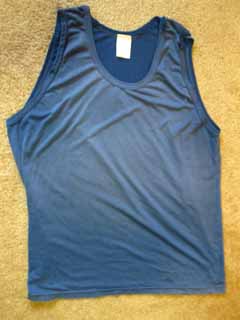 |
Jeeze, this one is 7 years old. I've sewn the trim back on too many times to count. It is still warm. This is the basic upper base layer, for all seasons. I've stripped to this layer to begin backpacking on cold, but sunny December days in the High Sierras. We had better start generating some heat as quickly as possible! |
Light Weight Poly Tank Top, All Season Base Layer |
|
Light Poly Insulation/Base Layer
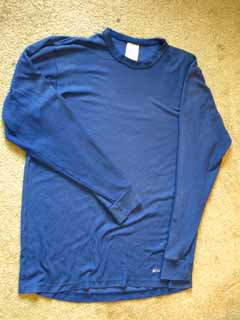 |
This is my base layer (along with the poly tank top above, and the heavy poly layer below) for mid-Winter. During Summertime, this is our also second base layer, but almost always kept at the top of our pack for easy depolyment. When we are climbing to a high pass, sweating and grunting, and a cold wind comes up, we can pull this baby out and quickly put it on. If the wind is carrying snow, we may also pull out your medium weigth jacket. |
Light Weight Poly Long Sleeve: 2nd Layer, All Seasons |
|
Heavy Poly Insulation
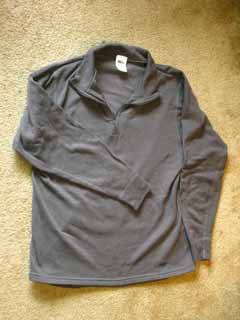 |
This layer stays at home until Fall, unless the weather is looking cold. During Winter it is part of my three-piece stationary base layers. This is used during Winter evenings, but is packed during most days. |
Medium Poly Long Sleeve: 3rd Layer, Optional Summer, Spring/Fall. Mandatory Layer, Winter |
|
Heavy Fleece Jacket
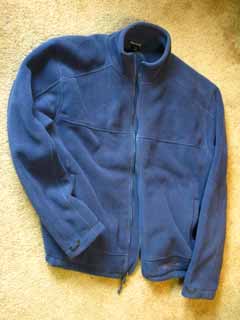 |
Fleece Coat. This is my all-season camp insulation jacket. This particular fleece coat is "heavy," being thicker than my medium weight Summer fleece, which I wore out. |
Fleece Coat: All Seasons |
|
REI Budget-Cut High Quality Fill Down
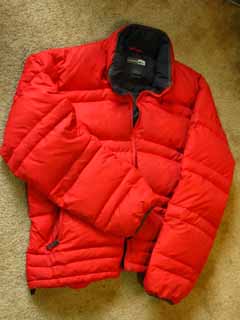 |
New REI down Coat |
Down Coat: Optional Spring/Fall. Mandatory Winter |
|
North Face Medium Weight Shell
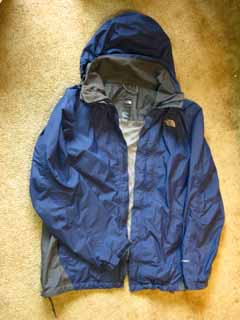 |
Just picked up this medium weight North Face Shell Jacket from their Outlet in Berkeley (March, 2009), after my apartment burned, and I lost my Marrmot Precept ultra-light shell jacket. I decided on a medium weight, rather than a lightweight, jacket. I was really happy I did. This jacket performed exceptionally well, almost perfectly, through the biggest Spring storms ever recorded in the in Northern Mendo County in May of 2009 when I did 131 miles along the Lost Coast. Massive downpours pushed perfectly sideways by the 50 mile per hour standing wind, which gusted up to phenomenal blows, were perfectly protected by this jacket. The "Almost" concerns the hood, and how it is connected to the coat body. Though watertight, this particular design impedes turning your head. When I turned my head more than 40° in either direction, the coat resisted, and leakage began. This really pissed me off at the time. But this was an extreme conditon, and this jacket, like the rest of my gear, kept me dry until the third day, after which everything was totally wet. Despite the wet, my poly gear kept me totally warm, even when "dry" was just a memory, for the next two days of the storm. This is my Summer, early Spring, and late Fall jacket. |
Medium Weight Shell: Summer, Spring and Fall |
|
Old North Face Mountain Jacket
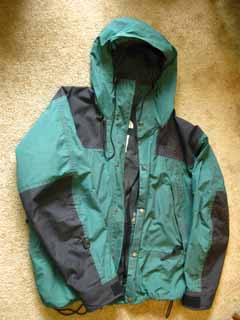 |
My good old North Face Mountain Jacket. This baby is the King of Mid-Winter. It is perfectly designed. Easy head-turning in the full coverage hood. Highest degree of wind and rain protection. Internal water-bottle storage pockets, to keep you water in liquid form. Mostly perfectly positioned pockets galore. My only bitch: The main front pockets are cut a little high. When I stuff my gloved hands in the front pockets, it forces my elbows into a slightly elevated position. It's just a little off, for my body design. |
Heavy Weight Shell: Winter |
|
Last page: Gear Next page: Lower Body
The Gear Section |
Gear is Important But what is even more important is our understanding of our own physical vunerabilities, the unpredictable power of the weather, and our own expectations. We've got to be able to pack and carry the gear necessary to effectively work and rest across the range of conditions we can expect. This becomes heavier the colder it gets. THIS PAGE IS UNDER CONSTRUCTION: STAY TUNED FOR MUCH MORE! COME ON BACK NOW, 'YA HEAR? Next page: |
Backpacker ForumsHave a great Sierra Nevada route or trip to relate?Post it on The Forums are broken down to cover High Sierra Backpacking Trails and Topics:
Experiences, comments, or pictures about this Section: Let it Rip HERE:Backpacking Gear ForumUpper Body Insulation |
Trailhead
Contact
Alex Wierbinski
Backpacking Lake Tahoe to Mount Whitney
Your guide to the High Sierra Crest, including the Tahoe to Yosemite, Pacific Crest, and John Muir Trails